

Also in the news...
Apply to be an approved operator of an Extra-Territorial Office of Exchange
Apply to become an approved operator if you're a non-UK designated operator running an Extra-Territorial Office of Exchange in Great Britain.
Register as an overseas company with Companies House
You must register an overseas company with Companies House if you want to set up a place of business in the UK.
How to successfully expand your business and set up in the UK
Tell us about your business and we'll give you the official information and data you need, in one place
Foreign Office travel advice updates
Latest travel information for British nationals affected by the situation in the Middle East.
Check if you need a UK visa
You may need a visa to come to the UK to visit, study or work.

A guide to exporting to Dubai
Dubai, known for its tall buildings, luxury lifestyles and career opportunities for foreigners, is the largest and most populous city in the United Arab Emirates, and the buzzing hub of the Middle East.
. It is the world’s fastest growing economy with a GDP of more than USD100 billion and a growth rate of 6.1%. The largest economic sectors in Dubai are property and construction, trade, entrepôt and financial services, which together contribute more than 70% of the emirate’s Gross Domestic Product. The UAE has made a great deal of progress in its efforts to move its economy away from oil, and the city is a major player in the gold trade. The crowded market place here means that exporters need hard work and creativity to succeed in this unique environment. 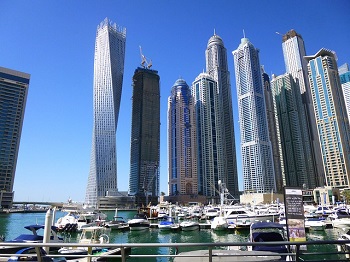
There are over 5000 British companies operating in the UAE – Shell, HSBC, and RBS to name a few – and the majority of the UAE’s population are immigrants, including around 120,000 British citizens. The UAE is also the UK’s fourth largest export market outside the EU. It is considered a gateway market that provides a bridge to more than a billion people in the surrounding regions of the Middle East as well as Asia, Africa and the Mediterranean. Furthermore, it does not impose taxation on personal income and capital gains and is ranked as one of the world’s easiest places to do business by the World Bank. It also has strong cultural and historical ties to the UK as many Emiratis have lived in the UK or visit regularly. Image by Funki50 from Pixabay
While Dubai is the most liberal of the emirates, it is still largely shaped by Arab culture, so knowing the business etiquette is crucial. Respect and modest behaviour are a big part of day-to-day business, as is punctuality. Reading up on local customs should be a given, as these may differ somewhat from Western conventions. Issues with business partners or clients should be discussed in private as public humiliation is considered disrespectful, and any faux pas in this area may seriously harm business relations going forward.
One of the many important things to keep in mind when doing business with locals is that face-to-face meetings are highly valued. Furthermore, when handing out business cards, they should be printed in your own language as well as Arabic. This is where translation and localisation come into play. Many Dubai residents are able to speak and read English and it is considered the language of business; however, many business documents are written in Arabic and it also shows respect to be able to provide information about a company in Arabic.
Successfully exporting to a country like Dubai requires effort and resources, and working with a professional translation agency, who can provide Arabic translation services can go a long way towards achieving this.